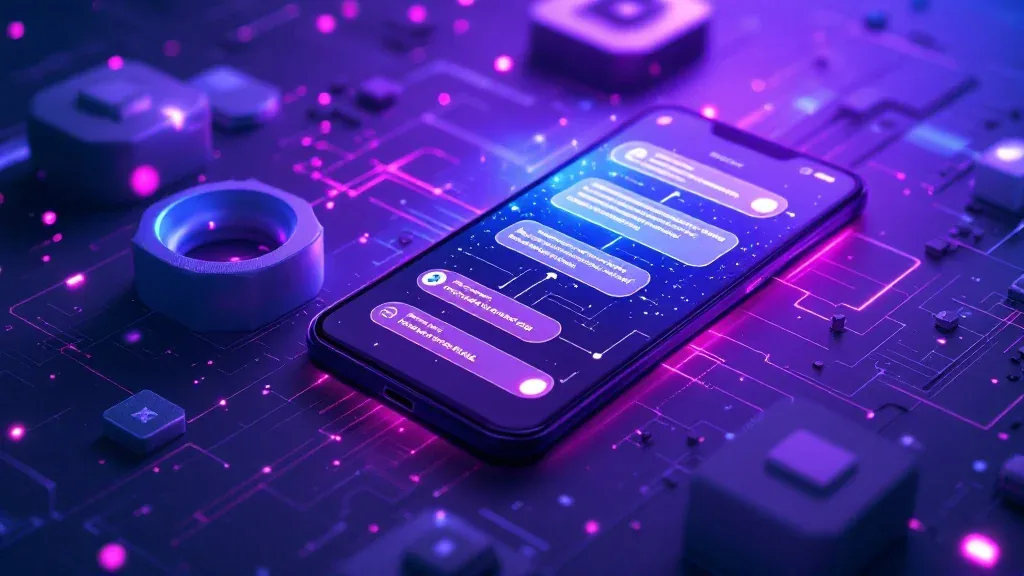
Cryptography determines who can read a message in transit; access control and agent design determine what the recipient can do after reading it.
A prompt injection attack in a messaging app occurs when the text of a message tries to persuade an AI assistant to ignore its governing rules and carry out an unauthorized request. End-to-end encryption protects the message in transit; however, if a user has allowed a bot to read the chat, or a device has been compromised, encryption cannot constrain the behavior of that authorized recipient.
Key takeaways
- End-to-end encryption prevents messages from being read in transit, not misuse by a virtual assistant authorized to see the decrypted text.
- Indirect prompt injection can hide in a private message, file, caption, or quoted content and turn into an instruction when processed.
- The risk of data leakage from an AI agent increases when the agent can access chats, memory, external tools, and the ability to send information or perform actions at the same time.
- Separating data from instructions, minimizing permissions, requiring human confirmation, and restricting outputs are among the main defensive layers; none provides a complete guarantee on its own.
- According to Livara's documentation, direct chats and compatible private groups with E2EE active have end-to-end encryption; an incompatible legacy group may remain outside that coverage. This protection does not guarantee the assistant's behavior after it receives the text.
How does prompt injection work in a messaging app?
Prompt injection means an attacker crafts input that a language model accepts as an instruction rather than data, causing it to depart from its governing policy. The OWASP guide to prompt injection identifies direct input and external content as routes for this risk. In an agent-based system, a diverted response can also lead to unintended use of connected tools.
In a direct attack, the user tells the bot to disregard previous rules. In an indirect attack, the malicious instruction is embedded in content the assistant reads for another task: an incoming message, quoted text, a caption, a document, or a tool's output. In the latter case, the attacker does not need to share an account with the AI agent; their content only needs to reach the context the agent processes.
For example, a user asks an assistant to summarize new messages. One message contains text posing as a “system instruction” and asks the agent to stop summarizing, take other information from the context, and send it to an external destination. This scenario is not guaranteed to succeed: the outcome depends on the model, application design, access permissions, and output controls. Even that possibility, however, matters for the security of a tool-enabled assistant.
A distinction must be made between manipulating a model's response and attacking an agent that can take action. An incorrect response may be irritating; an agent authorized to send messages, retrieve files, or call services can turn the same manipulation into data disclosure or an unwanted action.
Why does AI chatbot security depend on more than encryption?
AI chatbot security depends on the entire chain of trust: the messaging app, device, model, memory, tools, provider's server, and permission policy. End-to-end encryption covers only one specific boundary: preventing private content from being read between the sender and authorized recipients.
When a message reaches an authorized device, it is decrypted for display to the user. If an assistant can access the text on that device or through an authorized connection, it sees the data after decryption. From the protocol's perspective, a bot or application with permission may be a legitimate recipient; from the user's perspective, that same recipient may have excessive authority.
The difference can be summarized as follows: cryptography determines who can read a message in transit; access control and agent design determine what the recipient can do after reading it. To understand the first boundary, the guide to end-to-end encryption and what it does not protect explains why E2EE is not a remedy for malware, a dishonest recipient, or a compromised display.
The phrase “encrypted messaging and AI” should not automatically be interpreted as safe or unsafe, either. A local agent with no persistent memory or output tools does not present the same level of risk as a cloud bot with access to history, files, and external accounts. Architecture and the scope of permissions determine the outcome.
What risks arise when an AI assistant can access private chats?
Giving an AI assistant access to private chats brings content previously seen only by the human participants across a new trust boundary. The main risk is that, beyond reading the text, the assistant may be able to retain it, combine it with other data, or send it out through another channel.
Before enabling such a feature, five questions need clear answers:
- Exactly which conversations, attachments, and time period can the assistant read?
- Does processing happen on the device, or is the content sent to another server?
- What data does the provider retain, and is it used for training?
- What tools does the agent have for sending messages, uploading files, searching, or carrying out actions?
- Does every sensitive action require the user's explicit confirmation?
Permission to “read all chats” for a feature that only needs to summarize one selected message violates the principle of least privilege. This principle means giving each component only the minimum access needed for the current task. Permission limited to one message, one conversation, and one turn reduces the scope of damage, although content within that scope can still carry an attack.
Metadata is also distinct from content. According to Livara's documentation, operational metadata such as the sender, destination, and delivery times is stored for routing and synchronization. The guide to messaging metadata and the information it reveals explains this boundary. In addition to the text, an assistant may draw inferences from contact patterns and communication times, so the access policy needs to cover both.
How can data leak from an AI agent?
Data leakage from an AI agent generally occurs when the agent can see confidential content in its context and has a way to transfer it elsewhere. Prompt injection alone does not move data; leakage depends on a combination of malicious input, access to data, and an output channel.
Outgoing messages or files
An agent may place information in a response, new message, draft, file, or request to an external service. If the system sends output without restrictions or user confirmation, an attacker may try to disguise confidential data in a seemingly ordinary format.
Long-term memory
Some agents retain conversation summaries, preferences, or previous results for later use. A malicious instruction may try to put data into memory or retrieve it in another session. Short memory lifetimes, isolation between users, and the ability to view and delete memory reduce risk, but do not eliminate model errors.
Tool calls
A tool-enabled agent can search, read files, or perform other authorized actions. Reading files, sending messages, and making network requests should require separate permissions. Even automatically displaying a link or loading an external resource in an output can create a route for data to leave; the absence of a “Send” button is not enough on its own.
Compromised devices
Malware with sufficient access may see displayed text, notifications, application memory, or user input. In this situation, an attacker does not necessarily need to break encryption; they bypass it at the endpoint. Operating-system protections, updates, access control, and reviewing installed applications are part of the defense, not features of the messaging protocol.
What are the limits of Livara's encryption against this threat?
The Livara security documentation describes LVR1 for direct chats and LGS1 for compatible private groups. An incompatible legacy group may explicitly be outside E2EE; the status of the particular conversation needs to be checked. Public channels are also outside the scope of E2EE private chats.
Even in an E2EE conversation, if a user gives an assistant the decrypted text, message encryption does not control the purpose of subsequent processing. Checking a safety number also verifies a contact's key, rather than detecting malicious instructions in their text. This article concerns a general class of risk and does not confirm the existence or safety of any particular AI integration in Livara.
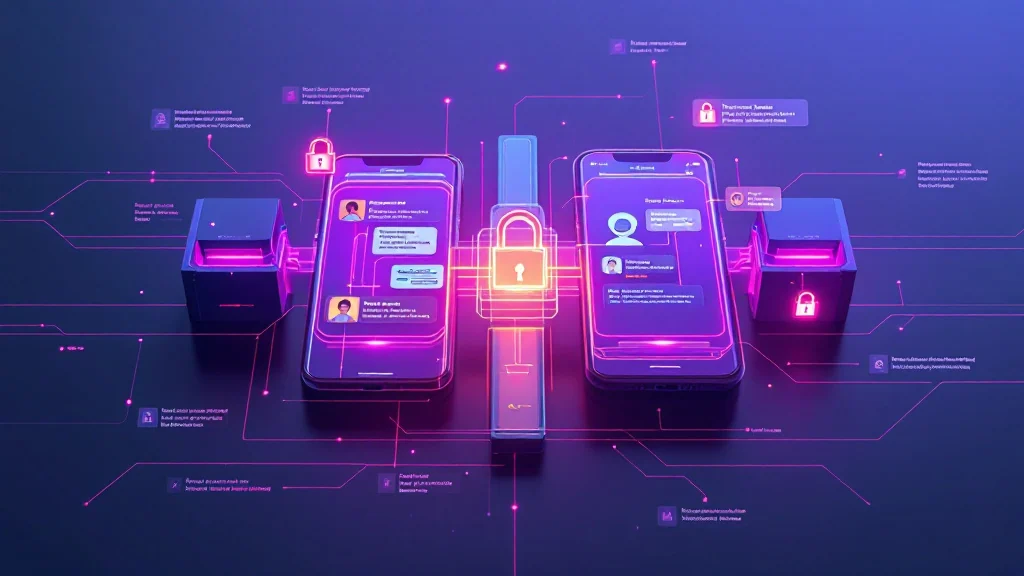
This is a conceptual illustration, not Livara's verified architecture; the locks in the image do not prove that an assistant cannot access selected text.
What architecture limits prompt injection in messaging apps?
A secure architecture should treat incoming messages as untrusted data, even when they come from a known contact within an encrypted chat. Encryption strengthens the authenticity of the communication channel, but does not establish that the sender's content is harmless to execute automatically.
Separate data from instructions
The application should keep the developer's fixed instructions, the user's explicit request, and content read from chats in separate layers. The NCSC warning about prompt injection emphasizes that this problem should not be assumed to have a definitive solution like SQL injection. Labeling content as “untrusted data” is useful, but language models do not always respect this semantic boundary without error, so separation must be accompanied by controls outside the model.
Reduce the agent's authority
A summarizing agent does not need to send messages automatically or read every file. Tools should have allowlists, narrow scopes, separate credentials, and short expiry periods. One-time permission for selected content is better than permanent access because it reduces both the likelihood of unintended access and the scope of a leak.
Check output through a deterministic gate
The model should not make the final decision on sending sensitive data itself. A non-generative layer can check the destination, data type, output volume, and requested action against deterministic rules. Structural rules and destination allowlists must be enforced outside the model; semantic detection of all confidential information can still fail. Minimal event logging, alerts, and the ability to stop are also necessary.
Require human confirmation for sensitive actions
Reading a draft is not the same as sending it. Sending messages, sharing files, adding members, changing account settings, or transferring data to an external service should involve a clear preview and informed confirmation. Vague or overly frequent approvals become a clicking habit; the interface needs to show exactly what data, destination, and consequence are involved.
Run the agent in a restricted environment
Process isolation, network access disabled by default, temporary storage, and narrowly scoped credentials limit the impact of a failure. These controls do not eliminate prompt injection; they prevent a diverted response from turning directly into broad access.
What should users and administrators do for AI chatbot security?
Users should regard every AI connection as a new recipient of private data. Administrators should also review an agent's data flows and actions before deployment and monitor them at runtime.
For personal use:
- Select only the message or file needed; do not grant access to the entire history.
- Check where processing happens, retention periods, training use, and how to delete data.
- Keep automatic message or file sending disabled unless there is a clear need for it.
- Keep the device, browser, and applications updated, and review sensitive permissions.
For organizations:
- Write a threat model that separately covers a malicious sender, a dishonest group member, the model service, external tools, and a compromised device.
- Log tool calls, permission changes, output destinations, and user confirmations with the minimum sensitive data necessary.
- Test hostile inputs in messages, documents, quoted text, images containing text, and retrieved content.
- Define action limits, request rates, allowed destinations, and an emergency stop switch for each agent.
- Default to failing closed: if the policy is unclear, the agent should stop rather than guess.
No checklist creates complete safety. The outcome depends on implementation, the model, settings, user behavior, and evolving attack methods. Good defense aims to reduce authority, reveal deviations, and limit damage.
Can encrypted messaging and AI be safe together?
Yes, encrypted messaging and AI can work together with controlled risk, provided the assistant has the least access necessary and does not take sensitive actions without confirmation. However, connecting any model to private content creates a new trust boundary that should not be hidden behind the E2EE label.
A lower-risk design keeps processing on the device as far as possible, limits context to the user's explicit selection, makes memory short-lived, and separates output tools. Local processing is not an absolute guarantee either: a compromised device, an insecure model, or broad permissions still create risk.
Users should be able to understand what data goes to the model, where the model runs, how long it retains anything, and what it can do. If a product does not answer these questions clearly, phrases such as “private AI” should not be taken as conclusive evidence of security.
Protocol documentation or matching an application's hash is not a security test of a connected assistant. Before enabling an integration, check the permissions and data path of that particular feature separately. One successful test also does not, on its own, cover all future inputs.
Frequently asked questions
Does end-to-end encryption stop prompt injection?
No. End-to-end encryption hides messages from intermediaries between the sender and authorized recipients. If an authorized bot, an application on the device, or malware has access to decrypted text, it can process it. Containing prompt injection requires limits on the agent's permissions, tools, memory, and outputs.
Is summarizing private chats with AI dangerous?
The risk depends on the architecture. Local summarization of one selected message, without memory or output tools, has a smaller scope of risk than a cloud bot with permanent access to all chats. Before using it, check the processing location, data retention, permission scope, and ability to send automatically.
Can a message from a known contact carry prompt injection?
Yes. Trusting the sender's identity is not the same as trusting all their content; their account may have been compromised, or they may have unknowingly forwarded malicious text. All content an agent reads should be treated as untrusted data, even within an authenticated, encrypted conversation.
Do LVR1 and LGS1 hide information from an AI assistant?
In conversations actually protected by LVR1 or LGS1 with E2EE active, these protocols aim to hide content from intermediaries without keys. If the user or application allows an assistant to read a decrypted message, these protocols do not block that authorized access. Assistant security must therefore be assessed separately from message transport security.
What is the first step in reducing data leakage from an AI agent?
First, narrow the agent's access: only the selected message, only for that turn, and without automatic sending. Then provide previews and human confirmation for sensitive actions, restrict output destinations, and log tool calls. These layers reduce risk, but do not create an absolute guarantee.